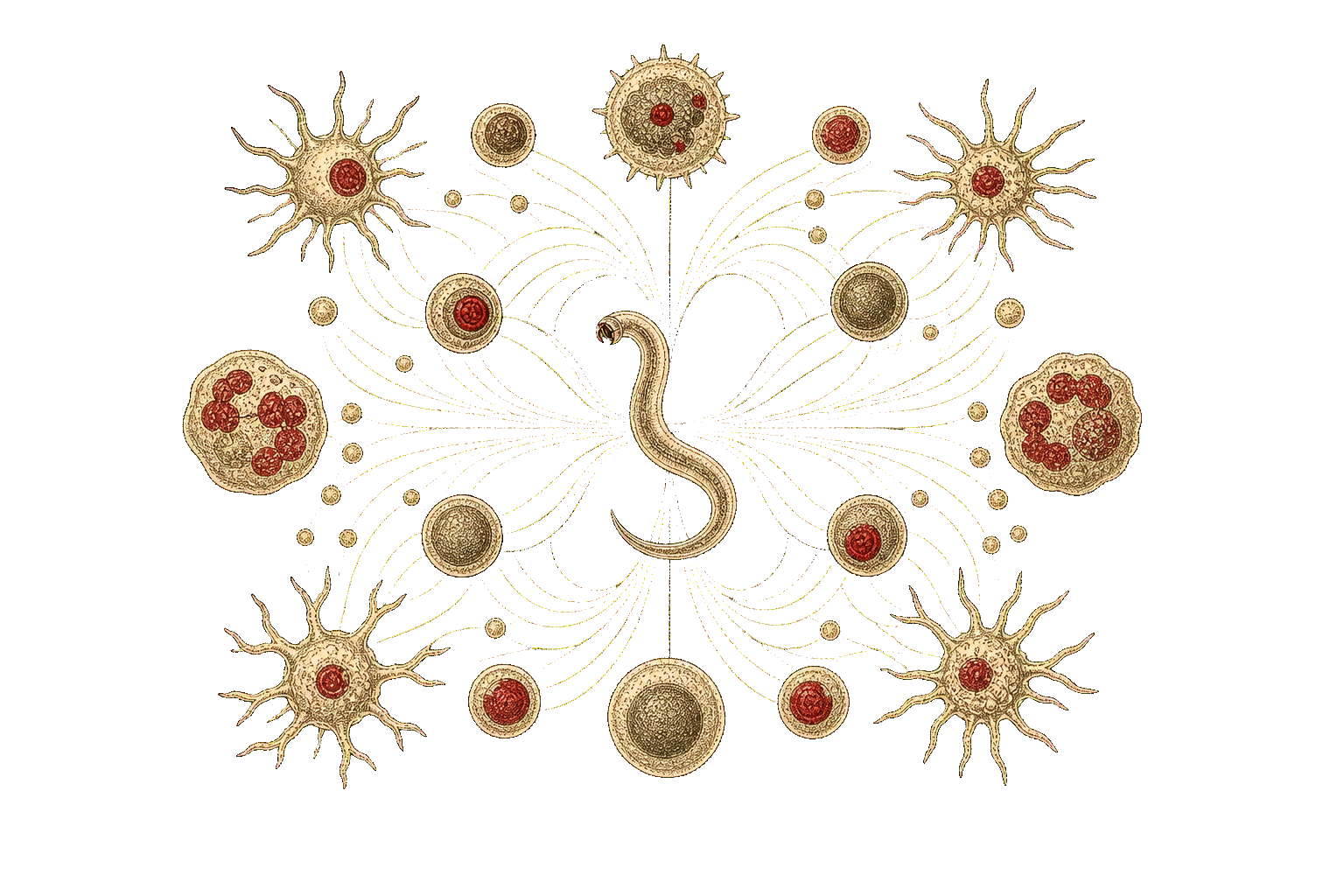
Picture the immune system as a brilliant but untrained guard dog. Its task is to attack genuine threats and leave all else in peace — yet it is not born knowing the difference. It must learn it, and most of that schooling happens in the earliest years of life.
For the whole of human history, the teachers were always present: microbes in the soil and water, and — for hundreds of thousands of years — intestinal worms called helminths. Not merely a disease to be survived, they were a near-universal condition of being human. The immune system evolved expecting them.
Then, in a few short generations, modern sanitation transformed the picture: treated water, sewage systems, widespread deworming, antibiotics. A genuine victory for public health — and one that removed, inside a single lifetime, organisms the immune system had lived alongside for three hundred thousand years.
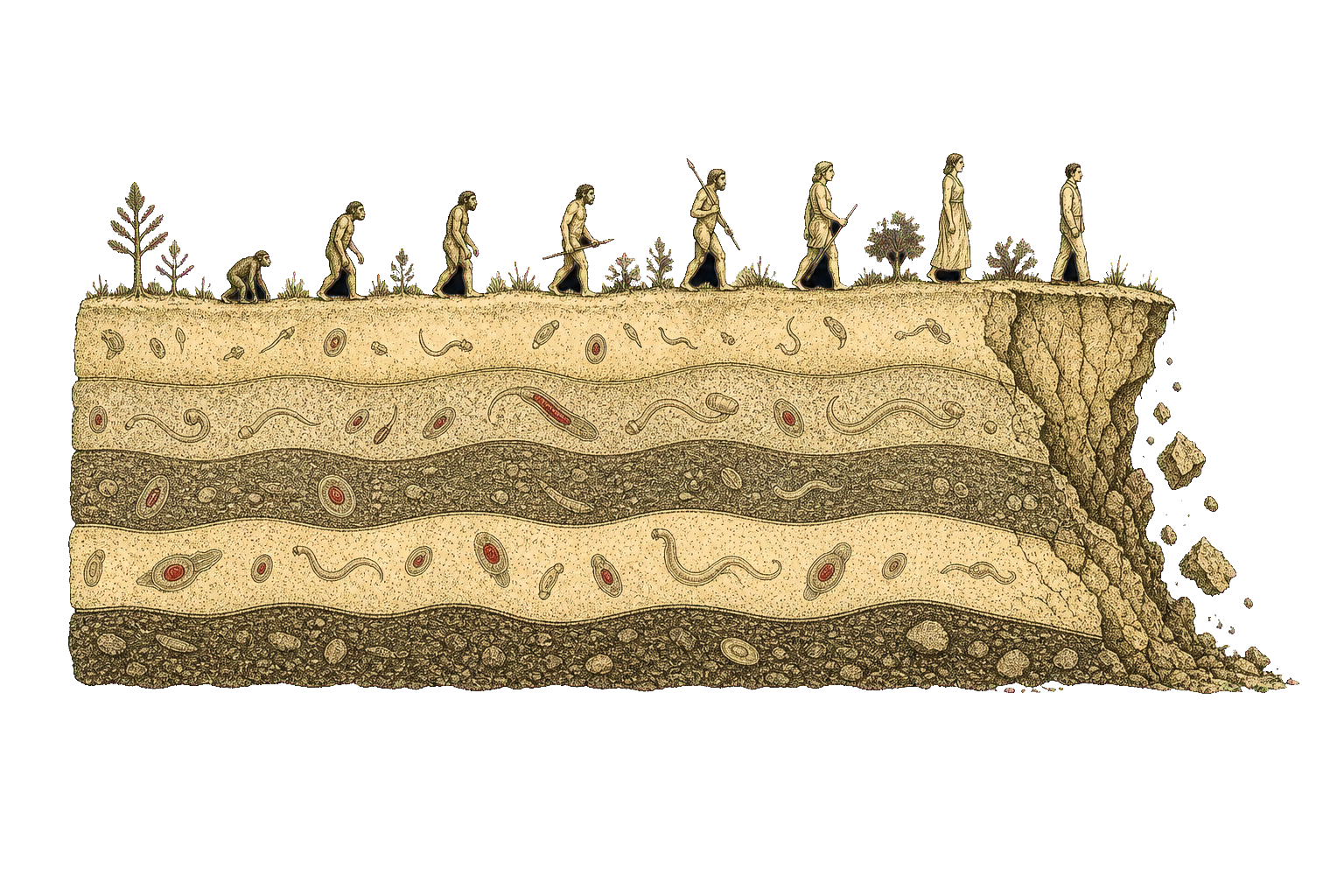
A guard dog with no training and nothing real to chase will bark at the mailman, the furniture, and at last its own family. That, in essence, is an allergy or an autoimmune disease.
The pattern was first named in the late 1980s — the hygiene hypothesis. Rook went further with a more specific version he called the "old friends" idea: the problem isn't cleanliness in general, but the removal of the particular organisms the immune system spent hundreds of thousands of years learning to live alongside. The Duke biophysicist William Parker extended this further still, naming the broader phenomenon "biota alteration" — the systematic removal, through sanitation systems, of symbiotic organisms the body evolved to host — and describes its consequence as an immune system turned dangerously "paranoid."