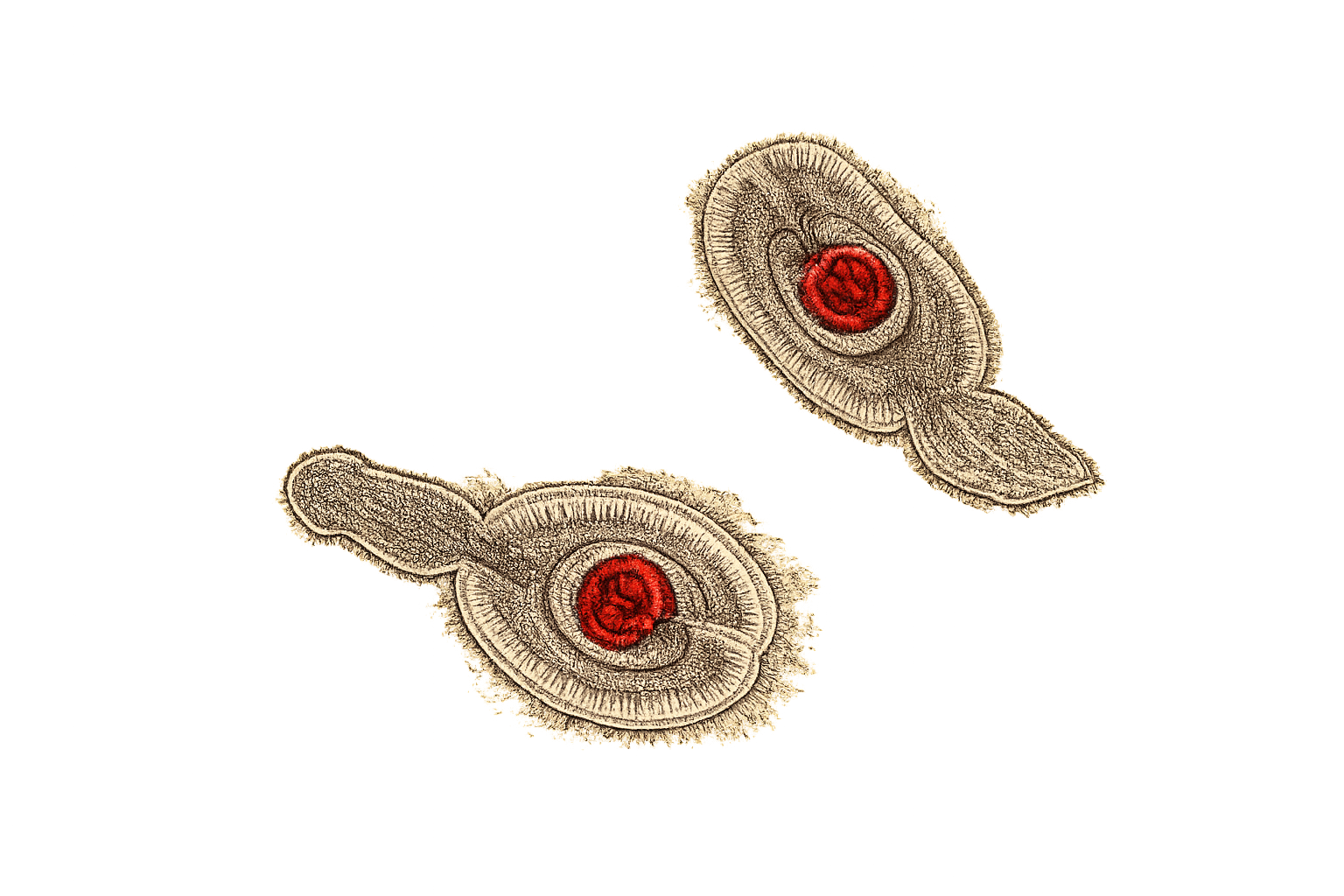
Hymenolepis diminuta
The gentlest of the four, and the usual choice for the cautious and the young. Swallowed as microscopic larval cysticercoids in a little liquid, it passes through within a couple of weeks, leaving no foothold — which is exactly why it is re-taken so often.
- Habitat
- Small intestine, transient
- Administration
- Swallowed, in liquid
- Persistence
- ~2 weeks
- Re-dosing
- Every ~2 weeks
- Temperament
- Mildest; favoured for the sensitive
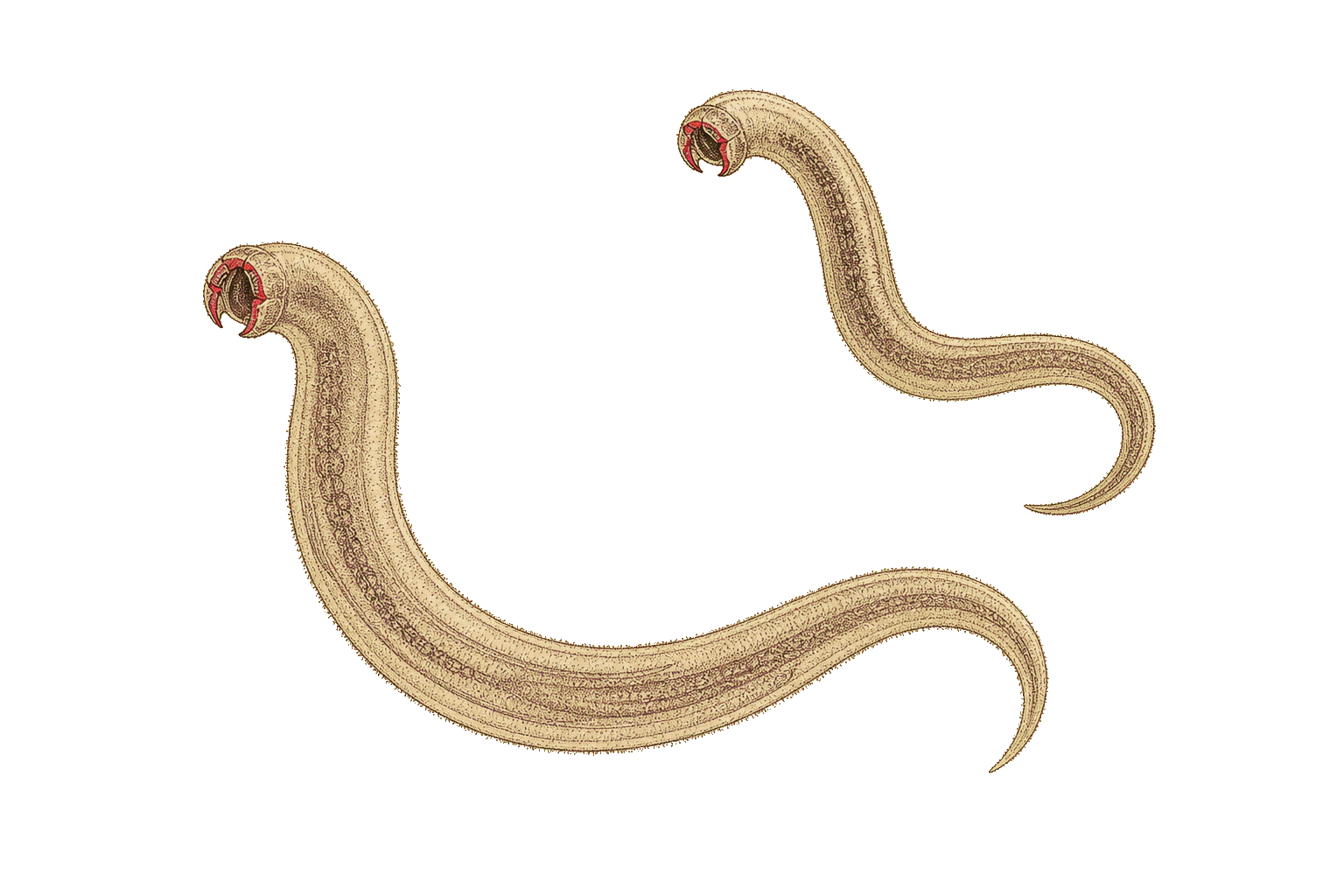
Necator americanus
The most widely used for autoimmune disease. A few microscopic larvae are applied to the skin on a small bandage; they migrate to the small intestine and settle for the long term. A passing itch at the site is common in the first weeks.
- Habitat
- Small intestine
- Administration
- Larvae applied to skin
- Persistence
- ~1 year
- Re-dosing
- Roughly yearly
- Temperament
- The mainstay for autoimmunity
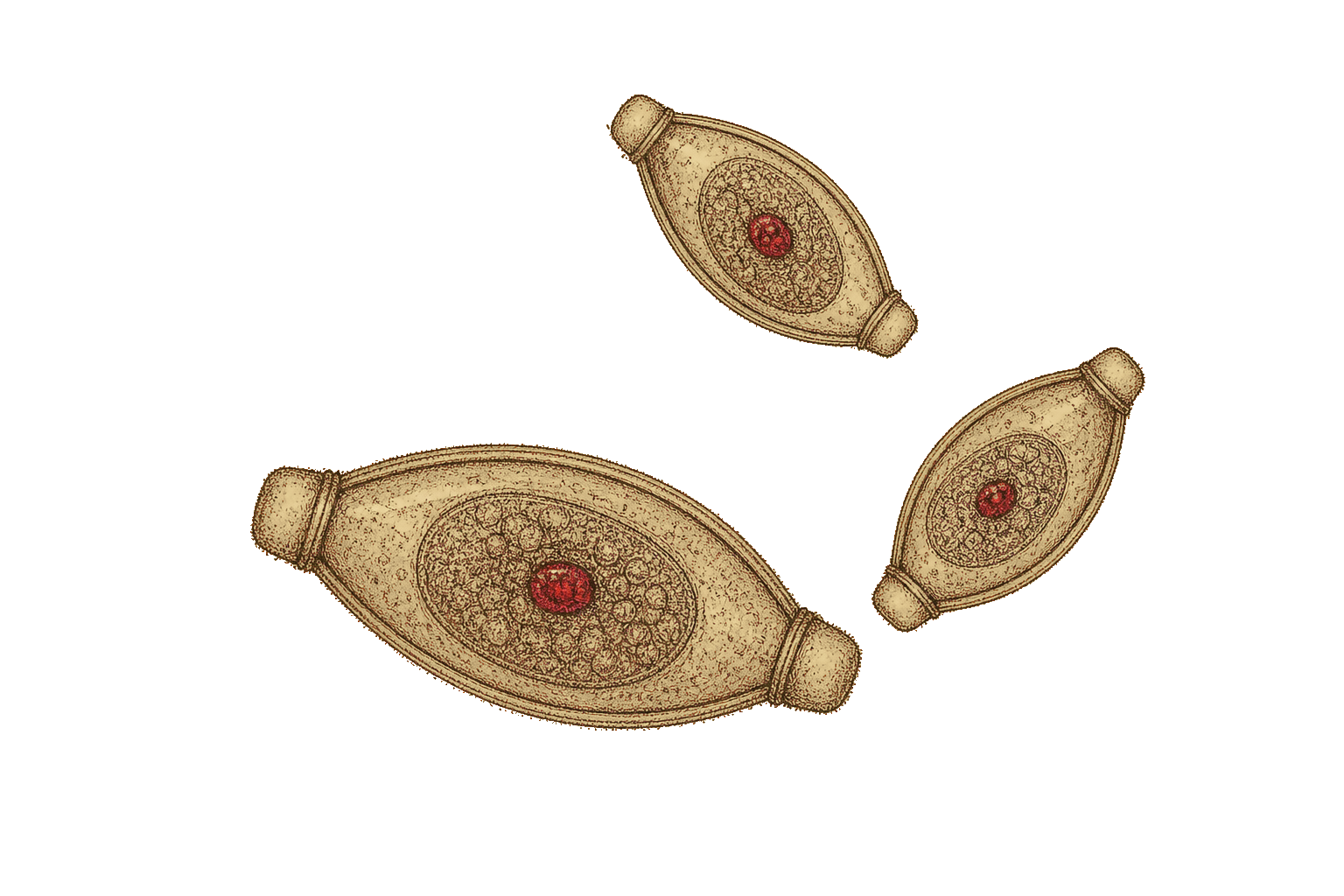
Trichuris suis
The first helminth carried into formal clinical trials. Its eggs are swallowed; because it does not establish itself for long in a human host, it clears within weeks and must be taken again on a short cycle.
- Habitat
- Gut, transient in humans
- Administration
- Ova, swallowed
- Persistence
- Weeks
- Re-dosing
- Every ~2–3 weeks
- Temperament
- The most studied in trials
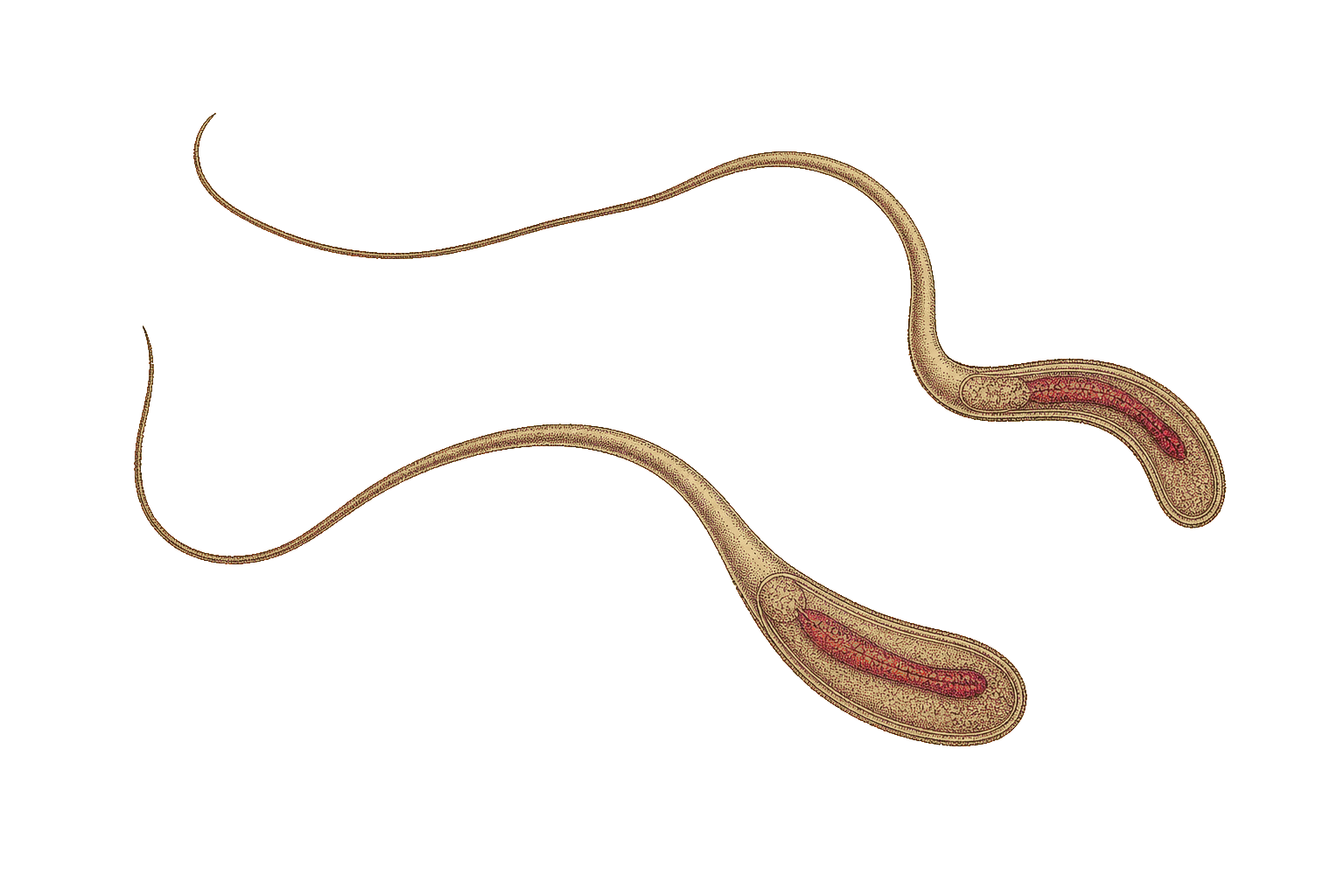
Trichuris trichiura
The human whipworm, generally taken up by more experienced self-treaters. Swallowed as ova, it settles in the large intestine and persists for the long term, much like the hookworm.
- Habitat
- Large intestine (caecum)
- Administration
- Ova, swallowed
- Persistence
- 1–2 years
- Re-dosing
- Infrequent
- Temperament
- For the experienced
Two are persistent (hookworm and human whipworm) and settle in for a year or more; two are transient (the rat tapeworm and pig whipworm) and pass through, requiring a steady rhythm of re-dosing. Which suits a given person depends on their condition, temperament, and tolerance.